

In the Exodus story we have 13 tribes, each named for a son or grandson of Jacob. Thirteen? No, no, we all know there are 12. Well, yes, but read on.
Jacob, son of Abraham, had 13 children with his four wives. His legacy comes from his 12 sons. His second youngest son, Joseph, ended up in Egypt (courtesy of his elder brothers selling him into slavery) and the rest immigrated to Egypt later on, along with their living parents and families.
In some places in Torah, the 12 tribes are named after the 12 sons. In other places, there is no tribe of Joseph but rather two tribes named after Joseph’s sons. The tribe of Levi drops out of the count at this point as they are the priests and not destined to have their own territory in Israel once the Exodus is over.
My novel focuses almost entirely on the Levites, more specifically, Jochebed and her descendants. People from other tribes are sometimes characters, like Joshua, or have married in to the family, like Elisheba.
Jochebed’s three children (Miriam, Aaron, and Moses) not only lead the Hebrews out of Egypt but they also literally lead the way when the Hebrews are on the move. The order of the rest of the tribes can vary though, depending on what we’re focusing on. There are four main ways to sort:
- Jacob’s sons’ birth order.
- The order in which they march in the desert.
- The placement of the tribes while camping at Mt. Sinai.
- The allotment of land once the Hebrews make it to the land of Israel.
Jacob’s Children by Mother
Let’s first sort the children by mother (listed by age within each line):
• Leah: Reuben, Simeon, Levi, Judah, Issachar, Zebulun, and a daughter, Dinah
• Rachel: Joseph (Ephraim and Menasseh), Benjamin
• Bilhah (Rachel’s maid): Dan, Naphtali
• Zilpah (Leah’s maid): Gad, Asher (Genesis 35:22–26)

Top row, right to left: Reuben, Judah, Dan, Asher
Middle: Simeon, Issachar, Naphtali, Joseph
Bottom: Levi, Zebulun, Gad, Benjamin
Birth Order
Reuben
Simeon
Levi
Judah
Dan
Naphtali
Gad
Asher
Issachar
Zebulun
Dinah
Joseph (his two sons were Ephraim & Manasseh)
Benjamin
Marching Order

This chart comes from the time after the Mishkan was created and the Hebrews left Mt. Sinai. On their way from Egypt to Mt. Sinai, we can place the Levites in front. The order here is:
Levi
Judah
Issachar
Zebulun
Reuben
Simeon
Gad
Ephraim
Manasseh
Benjamin
Dan
Asher
Naphtali
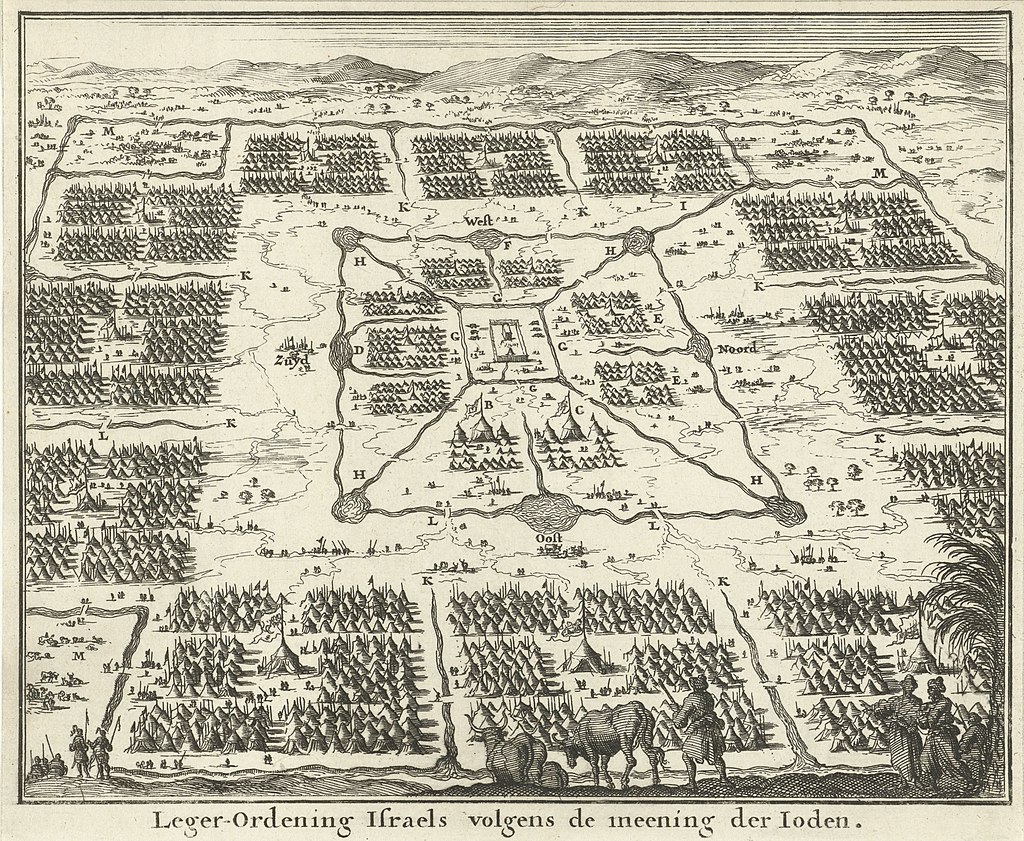
Arrangement at Mt. Sinai
The children of Israel shall encamp each man by his division with the flag staffs of their fathers’ house; some distance from the Tent of Meeting they shall encamp. Numbers 2:2
At Mt. Sinai the Levites camped near the Tent of Meeting and the other tribes camped around them.

East (the front of the camp):
Judah
Issachar
Zebulun
South:
Reuben
Simeon
Gad
West:
Ephraim
Manasseh
Benjamin
North:
Dan
Asher
Naphtali
Allotment of Land in Canaan


Leave a Reply